David has been volunteering with us since we opened our hub in January 2023, and over the past three years he has become a familiar, much-loved presence in our English classes.
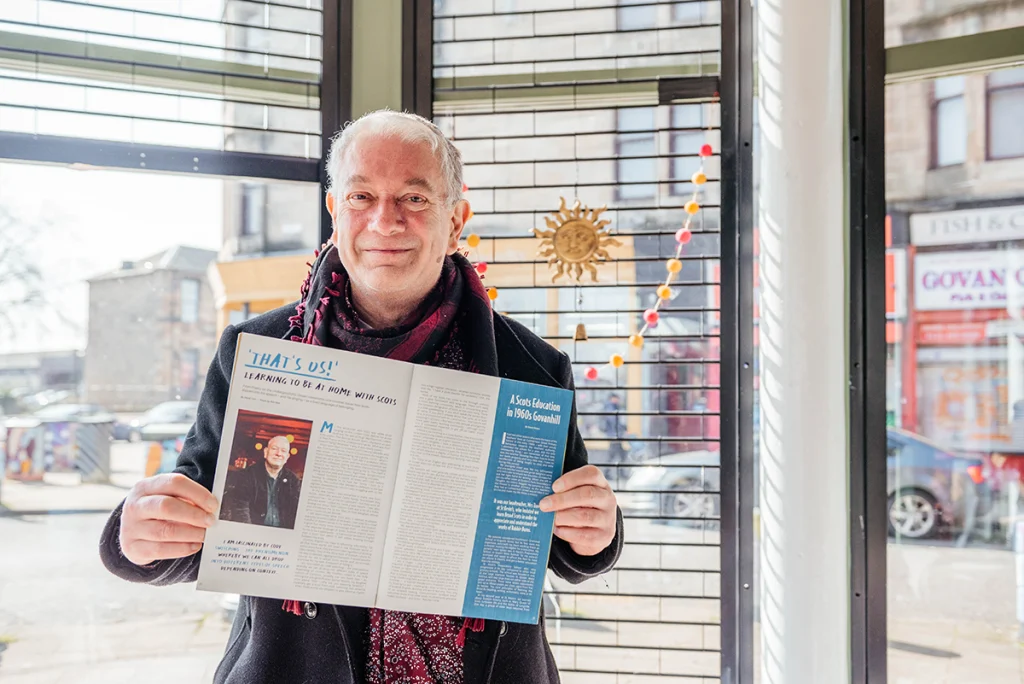
Originally from England, David has spent more than half his life in Glasgow. Over the years, the city has shaped him in ways that go well beyond an appreciation for the weather — though he will be the first to tell you that dreich is simply a better word than anything English has to offer for a grey Glasgow morning.
That same curiosity about language is exactly what makes David such a thoughtful teacher. At Maslow’s, he works mainly with asylum seekers and refugees, helping them build the skills needed for everyday life. But language in Govan is never quite as straightforward as a textbook. Alongside Standard English, David makes space for the Scots words his learners will actually hear on the street — aye for yes, wee for small, outwith for outside of, and the brilliantly expressive dreich, which he loves to teach for its very un-English ch sound. One of his favourite classroom moments is watching learners discover “That’s us!” — the classic Glaswegian way of saying we’re done — and then trying it out on a shopkeeper for the first time.
David is also a contributing author for Greater Govanhill magazine. In his latest piece, he writes about his own journey with Scots — from first encountering it as a poem on the London Underground, to finding that stooshie now comes to mind before controversy, to singing Hamish Henderson at Govan folk nights.
It is a warm, funny, and genuinely moving reflection on what it means to adopt a language that wasn’t originally yours — and how, somewhere along the way, it quietly becomes part of who you are.
His article is also a reminder of something we see every day at Maslow’s: learning a new language is never just a practical exercise. It is how you begin to feel at home. For our learners — many of whom are navigating enormous uncertainty — those small moments of connection through language matter more than any lesson plan.
Thank you, David, for supporting our learners and being such a valued part of the team!
That’s us!